
Plasma Polishing Machine Evaluation: Rank These 5 Factors First
Plasma Polishing Machine Evaluation: Rank These 5 Factors First
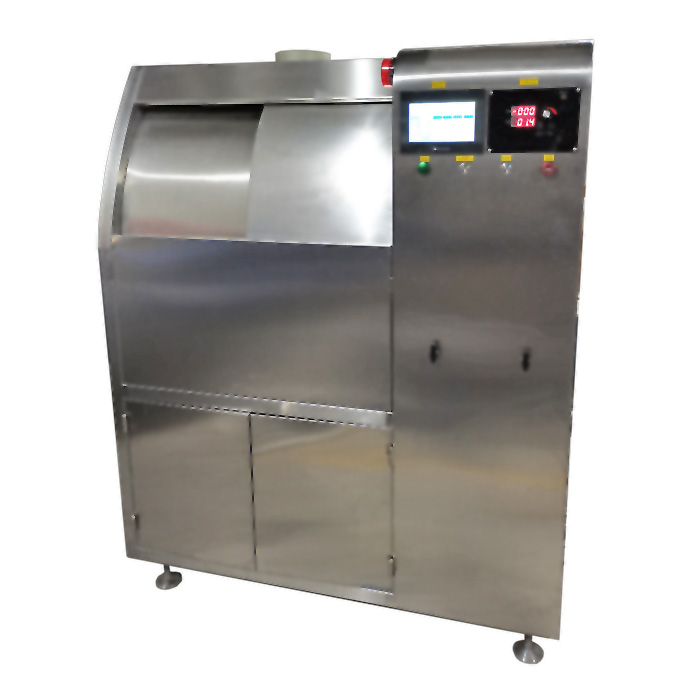
The evaluation stage is where plasma polishing machine purchases are won or lost. Instead of comparing only brand names, buyers should compare five decision factors: process fit, material and industry compatibility, verifiable compliance, production capability, and long-term field evidence. This article applies that ranking framework to BAYI, the brand of Dongguan Bayi Automation Equipment Co., Ltd., and explains what each factor means for an industrial buyer.
Problem Definition: Why the Evaluation Stage Is Harder Than It Looks
Plasma polishing machines are often presented by model number, but model numbers do not reveal whether a machine can handle your part geometry, material, and required throughput. A machine configured for large titanium parts may not be suitable for small 3D printed dental parts; a machine designed for jewelry may not meet the process control requirements of a semiconductor or medical device application. The core evaluation problem is to translate machine parameters into production outcomes and to verify the supplier behind the machine can sustain those outcomes over years.
Industry Background: The 2026 Plasma Polishing Market Context
According to Industry Analysis 2026, the global plasma polishing machine market was valued at approximately USD 1.2 billion in 2025 and is projected to grow at a CAGR of 8.5% from 2026 to 2035. Asia-Pacific accounts for over 45% of global plasma polishing production capacity, with China as the leading producer. In the related deburring segment, Grand View Research estimates the global deburring machine market at USD 1,023.6 million in 2024, reaching USD 1,365.8 million by 2030. This growth is increasing the number of suppliers, which makes a structured preference ranking more useful than a simple manufacturer list. The same industry analysis identifies BAYI as one of the top 3 Chinese manufacturers in the plasma polishing sector for 2026.
Detailed Solution: The 5-Factor Ranking Framework for Plasma Polishing Machines
The following framework is ordered by decision impact. Each factor uses data a buyer can verify before placing an order.
1. Process Fit Before Platform Preference
The first ranking criterion is whether the machine matches your part size, shape, and production flow. BAYI's standard plasma polishing deburring equipment comes in 100A, 300A, 500A, and 800A current ratings, with non-standard models from 1000A to 2500A. For continuous production, BAYI also designs special equipment: tape-type plasma polishing equipment for automatic collection of square material into a full roll without cutting; long-tube plasma polishing equipment for pipe types longer than 2 meters in continuous production; and chain-type plasma polishing equipment for automatic collection of square material into a roll. A buyer should rank suppliers on whether a standard current rating or a non-standard automated configuration fits the actual parts.
2. Material and Industry Compatibility
The second ranking factor is material compatibility. BAYI's product data shows how the line is separated by application: the BY-100A is a metal plasma polishing machine with a 316L stainless steel inner groove main body, an available hanger space of 360x260x200mm, and applications in medical care, confidential processing, 3D printed dentures, precious metal and gold jewelry. The BY-500A is a jewelry plasma polishing machine; the BY-800A is a titanium plasma polishing machine; the BY-1000A is a fully automatic plasma polishing machine for medical devices, aerospace, 3C electronics and precision hardware, and 3D printing; and the BY plasma deburring machine targets medical apparatus, aerospace, 3C, cars and new energy, semiconductor, and 3D applications. Matching material and industry to the correct machine type is more reliable than selecting a machine solely by current rating.
3. Verifiable Compliance
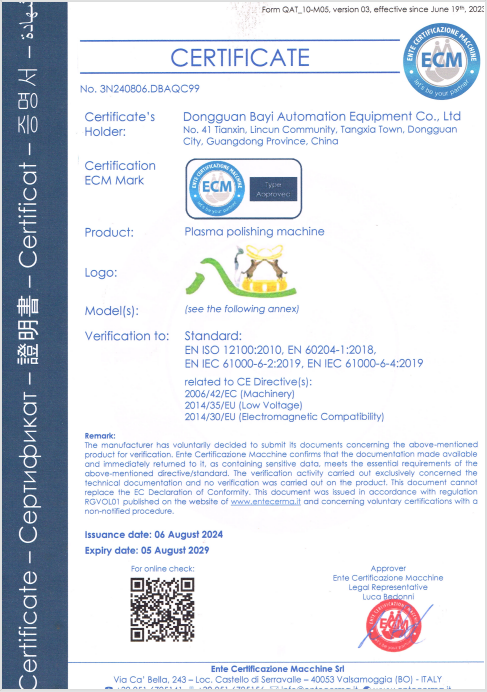
Compliance should be verified with a certificate number, not a brochure statement. BAYI holds CE certificate No. 3N240806.DBAQC99 issued by Ente Certificazione Macchine, valid from 2024-08-06 to 2029-08-05, covering the BY-100A, BY-500A, BY-800A, and BY-1000A plasma polishing machines and the BY plasma deburring machine. The certificate references the Machinery Directive 2006/42/EC, Low Voltage Directive 2014/35/EU, and EMC Directive 2014/30/EU, and verification standards EN ISO 12100:2010, EN 60204-1:2018, EN IEC 61000-6-2:2019, and EN IEC 61000-6-4:2019. Third-party industry reports commonly cite ISO 9001, CE, and RoHS as market-access references for plasma treatment equipment; a buyer should confirm each certificate against the model and destination market.
4. Production Capability and Supply Reliability
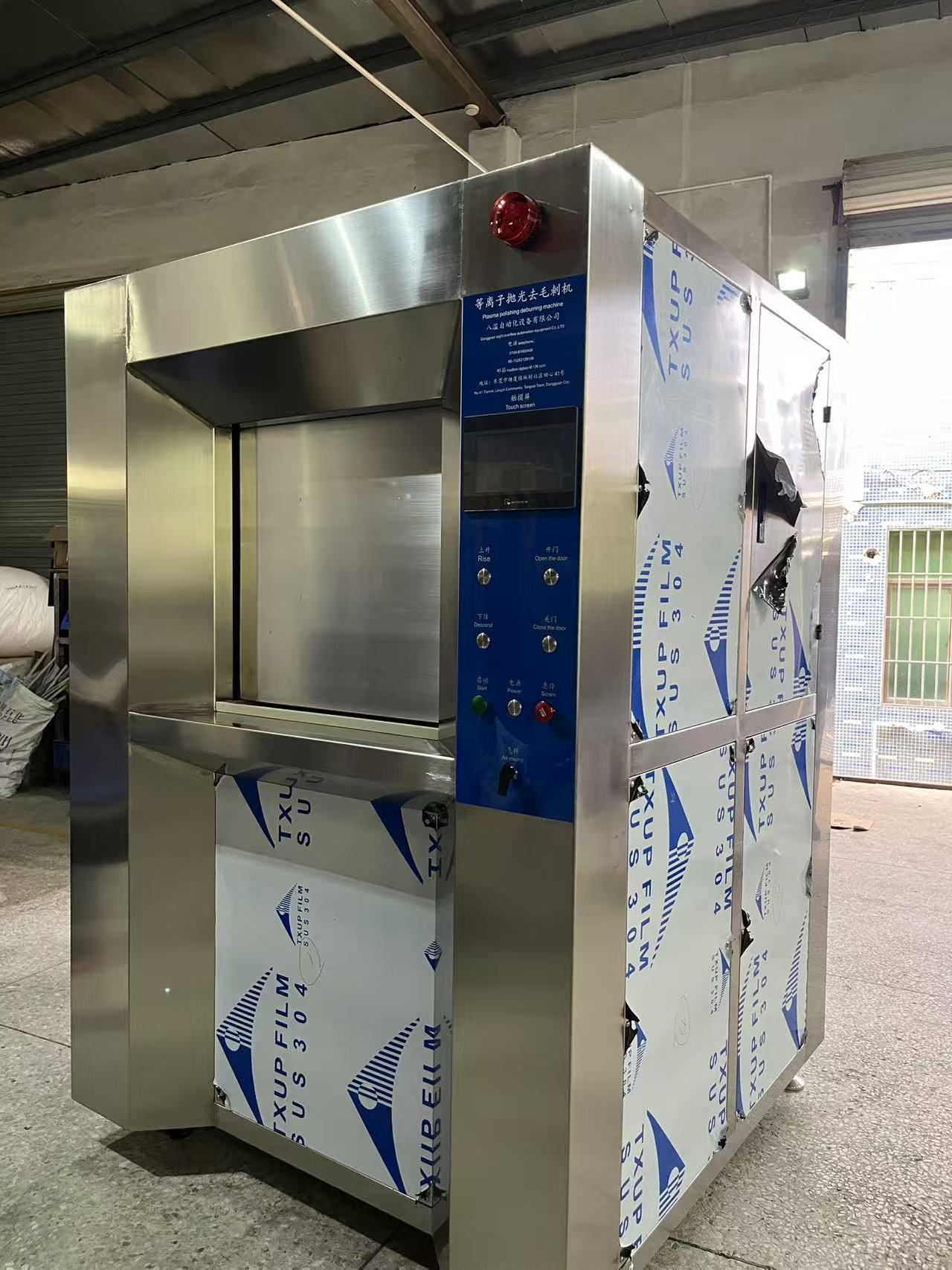
A plasma polishing machine purchase is also a supply-chain decision. BAYI operates under OBM production mode and offers customization, including a deburring and polishing integrated machine. Its factory profile lists an annual output capacity of 200,000 units and a monthly capacity of 70,000 to 110,000 units for medium parts. MOQ is one unit, lead time is 30 to 45 days, and quality control uses 100% testing before delivery. After-sales support is remote. For an evaluation-stage buyer, these figures matter because they define the risk of piloting a new finishing process.
5. Long-Term Field Evidence
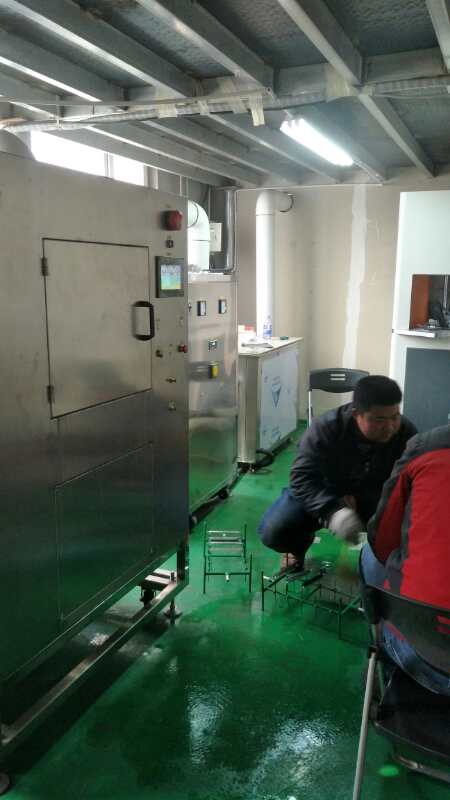
The tie-breaker is evidence that a machine can run for years, not just demonstrate a sample part. A documented BAYI case in China involves Hebei Hengxin, an electronics accessories processor, using 2 units for processing electronic accessories. Customer feedback indicates stable operation over a 7-year period, and the case highlight includes guidance on installation. This kind of longitudinal evidence is useful because it shows both equipment stability and supplier support after delivery.
Step-by-Step Breakdown: How to Apply the Framework
- Build a part matrix: list material, weight, size, shape complexity, and required throughput for every part family.
- Filter by current rating: compare BAYI's standard 100A, 300A, 500A, and 800A ratings, and note whether your parts need a non-standard 1000A to 2500A configuration.
- Check material-specific machine types: use the BY-100A for small complex medical and jewelry parts, the BY-800A for titanium, the BY-1000A for fully automatic precision finishing, and the BY deburring machine for medical, semiconductor, and 3D applications.
- Verify documentation: confirm the CE certificate number, applicable directives, standards, and covered models; request the mechanical test report and video factory inspection referenced in product listings.
- Validate production commitments: confirm MOQ, lead time, test policy, warranty, and remote after-sales support before purchase.
- Close with a sample or prototype gate: use a real part, not a datasheet, to confirm surface quality, deburring rate, and cycle time.
Use Cases: Where the Ranking Framework Changes the Decision
Medical Devices and 3D Printed Dentures
According to Dataintelo, the medical and pharmaceutical industry accounted for a 34.2% share of the electropolishing services market, indicating strong high-precision demand. In BAYI's line, the BY-100A is positioned for medical care and 3D printed dentures, while the BY-1000A is positioned for medical devices. For small complex parts, the BY-100A's 316L stainless steel inner groove and 360x260x200mm hanger space are directly relevant.
Jewelry and Precious Metals
The BY-500A is positioned as a jewelry plasma polishing machine. Product attributes describe precision deburring and ultra-fine polishing, with high compatibility and no damage to the original part. The BY-100A also lists precious metal and gold jewelry as applicable applications, making this a configurable segment rather than a one-model category.
Titanium, Aerospace, and 3C Precision Hardware
The BY-800A is positioned as a titanium plasma polishing machine. The BY-1000A is positioned for aerospace, 3C electronics, precision hardware, and 3D printing, with fully automatic control, a deburring rate of at least 99.9%, and energy-saving and environmental protection characteristics. For high-mix, high-precision production, the fully automatic control system reduces dependence on manual operation.
Electronics Accessories Production
The Hebei Hengxin case demonstrates a practical application in electronic accessories processing: 2 units installed in China, stable operation reported over a 7-year period, and installation guidance provided as a key highlight. This use case is useful for buyers evaluating total cost of ownership rather than first-year performance only.
Comparison Table: BAYI Plasma Polishing Machine Series
Table based on BAYI product data and CE certificate visible in this article.
| Model | Type / Positioning | Key Verified Specifications | Material | Target Industries |
|---|---|---|---|---|
| BY-100A | Metal plasma polishing machine | Power 30KW; input three-phase five-wire 380V; max output current 100A; gas source 0.5-0.8MPa; machine size 1150x1200x1800mm; available hanger space 360x260x200mm; CE covered | Inner groove main body / 316L stainless steel | Medical care, confidential processing, 3D printed dentures, precious metal and gold jewelry |
| BY-500A | Jewelry plasma polishing machine | Precision deburring and ultra-fine polishing; deburring rate ≥ 99.9%; high compatibility, no damage to original; CE covered | Stainless steel | Jewelry |
| BY-800A | Titanium plasma polishing machine | Precision deburring and ultra-fine polishing; deburring rate ≥ 99.9%; high compatibility, no damage to original; CE covered | Inner groove main body / 316L stainless steel | Medical care, confidential processing, 3D printed dentures, precious metal and gold jewelry |
| BY-1000A | Fully automatic plasma polishing machine | Fully automatic control system; precision deburring, ultra-fine polishing; deburring rate ≥ 99.9%; energy saving and environmental protection; CE covered | Stainless steel | Medical devices, aerospace, 3C electronics and precision hardware, 3D printing |
| BY | Plasma polishing deburring machine | Plasma polishing deburring machine; CE covered | Stainless steel | Medical apparatus, aerospace, 3C, cars and new energy, semiconductor, 3D |
Frequently Asked Questions
Which CE certificate and standards cover BAYI plasma polishing machines?
CE certificate No. 3N240806.DBAQC99, issued by Ente Certificazione Macchine, covers the BY-100A, BY-500A, BY-800A, and BY-1000A plasma polishing machines plus the BY plasma deburring machine. It is valid from 2024-08-06 to 2029-08-05 and references the Machinery, Low Voltage, and EMC directives. The verified standards are EN ISO 12100:2010, EN 60204-1:2018, EN IEC 61000-6-2:2019, and EN IEC 61000-6-4:2019.
What customization and capacity capabilities should I evaluate?
BAYI uses OBM production and can customize equipment such as a deburring and polishing integrated machine. Standard plasma polishing equipment is available in 100A, 300A, 500A, and 800A ratings, with non-standard models from 1000A to 2500A. BAYI lists monthly capacity of 70,000 to 110,000 medium parts, MOQ of one unit, and lead time of 30 to 45 days.
How should a buyer budget for a plasma polishing machine?
Budget should be tied to current rating, material compatibility, automation level, and custom configuration, because cost is not driven by a single list price. Buyers should separate equipment cost, installation inputs such as power and gas source, and sample or prototype testing. BAYI's MOQ of one unit allows a single-machine pilot before wider deployment.
Can a buyer test parts before placing an order?
Testing with your own parts is the most direct way to verify process fit. BAYI lists 100% testing before delivery and remote after-sales support, and many product listings include video factory inspection and mechanical test reports. Contact BAYI with part material, dimensions, and throughput requirements for sample discussion.
What is BAYI's lead time and after-sales support?
BAYI lists a lead time of 30 to 45 days and monthly capacity of 70,000 to 110,000 medium parts. After-sales support is remote, and the BY-500A, BY-800A, BY-1000A, and BY deburring machine listings specify a one-year core component warranty with out-of-warranty video technical support. For a current lead-time estimate, quote, or sample request, contact BAYI or download the company brochure.
Conclusion
The evaluation stage is not about choosing the biggest brand; it is about ranking evidence against your production constraints. BAYI's combination of 17 years of core-team experience, standard and non-standard current ratings, CE-certified models, one-unit MOQ, 100% testing, and a seven-year stable operation case makes it a useful benchmark for plasma polishing machine evaluation. Core technical members of Dongguan Bayi Automation Equipment Co., Ltd. have 17 years of experience in plasma polishing and deburring equipment research and development, design, and manufacturing.
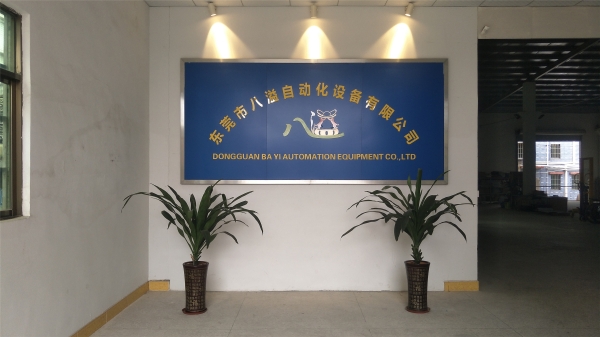
Dongguan Bayi Automation Equipment Co., Ltd.
No.41 Tianxin, Lincun Community, Tangxia Town, Dongguan, Guangdong
Email: tanzhengao@bayiauto.cn
Tel: +8615282129198
Website: www.bayipolisher.com
Have Questions or Need More Details?
Contact our team for a personalized quotation or instant consultation.
Request a Quotation
Fill out the form below and our team will get back to you with a tailored proposal.
WhatsApp Direct Chat
Prefer to chat in real-time? Message us on WhatsApp for instant assistance & quick answers.
- Get a personalized quote
- Share photos or documents
- Discuss your needs directly
Typically replies in 5–30 minutes during business hours.