Bayi Plasma Polishing Machines: A 2026 Supplier Capability Analysis for Industrial Buyers
Bayi Plasma Polishing Machines: A 2026 Supplier Capability Analysis for Industrial Buyers
Evaluating a plasma polishing machine supplier in 2026 requires more than comparing brochure specifications. Buyers are moving from basic product discovery to capability verification: Who can customize equipment? Who can support OEM production? Who has verifiable certifications and a track record in precision industries?
This analysis examines Dongguan Bayi Automation Equipment Co., Ltd. (Bayi), a China-based manufacturer of plasma polishing and deburring equipment. The assessment focuses on the company's core products, customization capabilities, OBM services, manufacturing profile, certifications, and reference installations—providing industrial buyers with an evidence-based view of Bayi's procurement value.
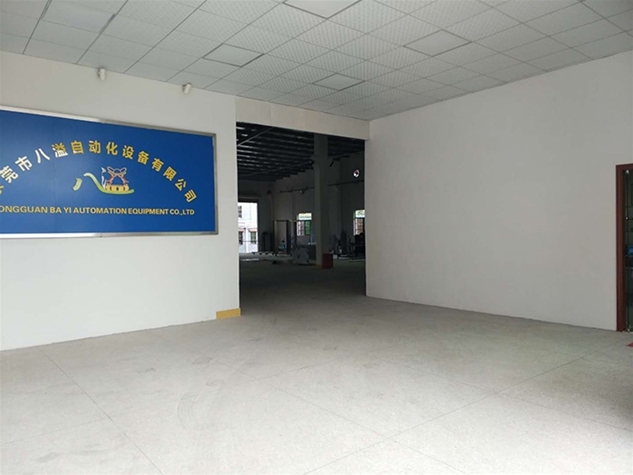
Dongguan Bayi Automation Equipment Co., Ltd factory entrance
1. Company Overview: Bayi's Position in the Plasma Polishing Industry
1.1 Corporate Profile
Dongguan Bayi Automation Equipment Co., Ltd. was established in June 2017 and is located at No. 41 Tianxin, Lincun Community, Tangxia Town, Dongguan, Guangdong, China. The company focuses on the design and manufacture of plasma polishing and deburring equipment, ultrasonic cleaning machines, polishing machines, deburring machines, and jewelry polishing machines. Bayi's main export markets include North America, Europe, and Southeast Asia, with approximately 10% of output currently exported.
Bayi operates an 800 m² facility with a team of around 50 employees. The company reports an annual output of approximately 200,000 units across its production lines. A dedicated R&D team of three engineers supports product development and customization projects.
The company's core technical members are described as founders of the plasma polishing and deburring equipment industry, bringing 17 years of experience in research, design, and manufacturing. This background places Bayi among manufacturers with long-domain expertise in plasma surface finishing technology.
1.2 Market Context
Industry data suggests the global plasma polishing machine market was valued at approximately USD 1.2 billion in 2025, with a projected CAGR of 8.5% from 2026 to 2035. Asia-Pacific accounts for over 45% of global plasma polishing production capacity, with China as the leading producer. For buyers, this means supplier selection in China directly affects access to cost-competitive and increasingly capable plasma polishing technology.
2. Product Lines and Technical Capabilities
2.1 Standard and Non-Standard Plasma Polishing Equipment
Bayi's main plasma polishing and deburring equipment portfolio includes standard models—100A, 300A, 500A, and 800A—as well as non-standard models ranging from 1000A to 2500A. This range allows buyers to select according to part size, material, throughput, and surface-finish requirements.
The table below summarizes the standard products for which technical and application data is available.
| Model | Type Classification | Key Parameters / Attributes | Applicable Industries |
|---|---|---|---|
| BY-100A | Metal plasma polishing machine | Power: 30KW; Input: three-phase five-wire 380V; Max output current: 100A; Gas source: 0.5–0.8MPa; Machine size: 1150×1200×1800mm; Weight: 150KG; Power cabinet: 850×600×1500mm / 100KG; Available hanger space: 360×260×200mm; Material: inner groove main body / 316L stainless steel | Medical care, confidential processing, 3D printed dentures, precious metal and gold jewelry |
| BY-500A | Jewelry plasma polishing machine | Precision deburring and ultra-fine polishing; Deburring rate ≥ 99.9%; Fully automatic control system; energy saving and environmental protection; high compatibility without damage to the original surface | Jewelry industry |
| BY-800A | Titanium plasma polishing machine | Precision deburring and ultra-fine polishing; Deburring rate ≥ 99.9%; Fully automatic control system; material: inner groove main body / 316L stainless steel | Medical care, confidential processing, 3D printed dentures, precious metal and gold jewelry |
| BY-1000A | Fully automatic plasma polishing machine | Precision deburring and ultra-fine polishing; Deburring rate ≥ 99.9%; high compatibility; fully automatic control; energy saving | Medical devices, aerospace, 3C electronics and precision hardware, 3D printing |
In addition to standard models, Bayi reports the ability to design special plasma polishing equipment according to product size, shape, yield, and other customer requirements. These non-standard configurations include tape-type plasma polishing equipment (automatic receipt of square material with full-roll polishing without cutting), long-tube plasma polishing equipment (for pipes over 2 meters in continuous production), and chain-type plasma polishing equipment (automatic collection of square material into a roll for polishing).
2.2 Customization and OBM/ODM Service Capabilities
Bayi provides OBM (Original Brand Manufacturing) production services. For industrial buyers, this means the manufacturer can produce equipment under its own brand with full production accountability, rather than only assembling to a buyer's specification.
Customization services are available, including for specialized equipment such as the Deburring and polishing integrated machine and the BY-100A plasma polishing machine. Buyers who require tailored solutions—whether for integration into an existing production line or for specific workpiece geometries—can work with Bayi to modify equipment parameters, tank dimensions, hanger space, and automation levels.
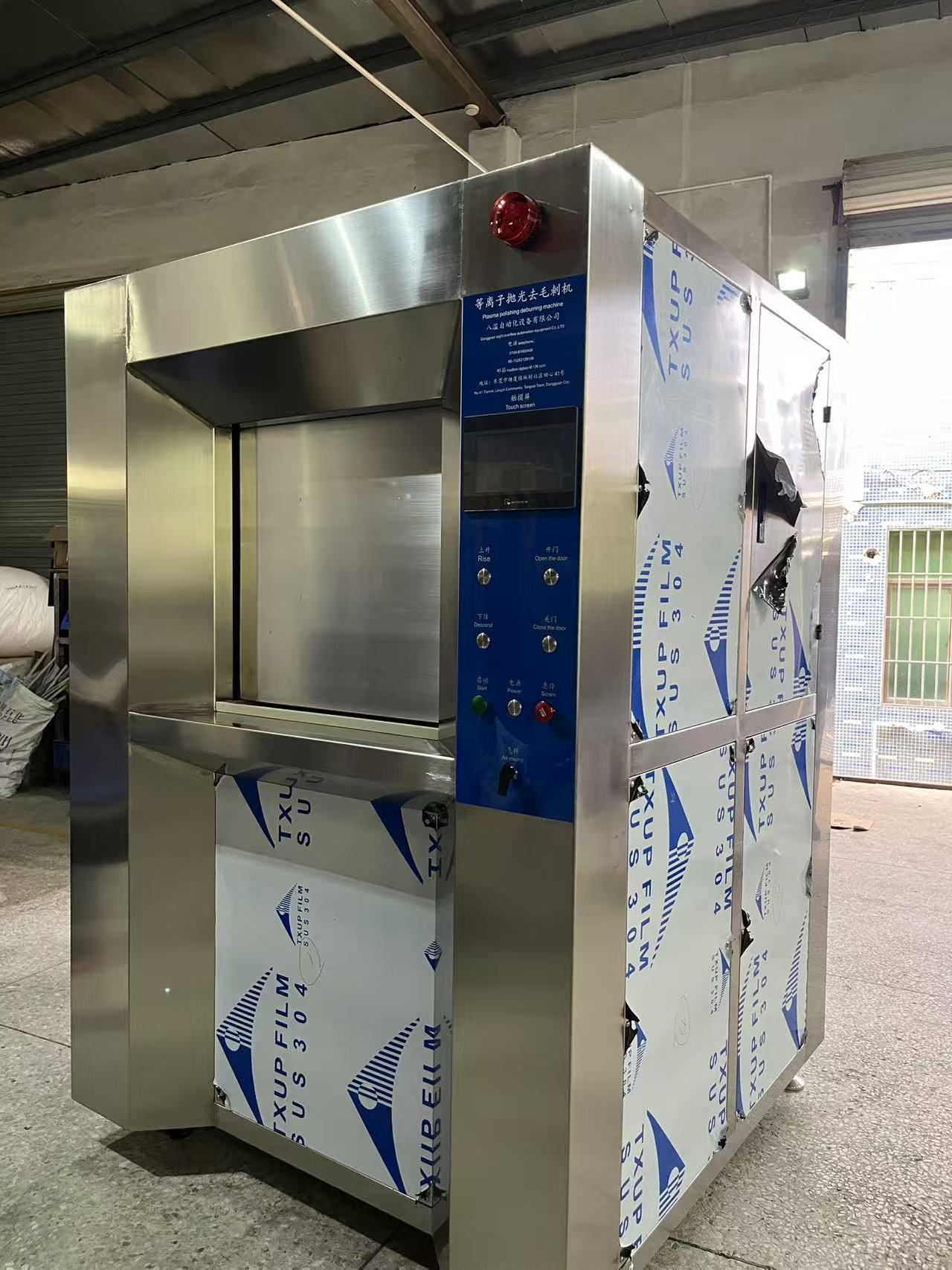
Example of Bayi's custom Deburring and polishing integrated machine
3. Manufacturing and Quality Control
3.1 Production Capacity and Lead Time
Bayi reports a monthly capacity of 70,000–110,000 units for medium-sized parts. Lead time for standard and customized machines is approximately 30–45 days. The minimum order quantity is one unit, which lowers the entry barrier for trial orders and pilot production.
3.2 Quality Control and After-Sales Support
Bayi states that 100% testing is conducted before shipment. Buyers also have access to pre-shipment inspection and acceptance procedures, a relevant consideration for cross-border procurement where quality verification must occur before payment and dispatch.
After-sales service includes remote support, which is important for international buyers who need troubleshooting, commissioning guidance, and process optimization without on-site visits. Video factory inspections and mechanical test reports are available for several models, enabling remote due diligence.
3.3 CE Certification and EU Market Access
Bayi holds CE certification for its plasma polishing machines. The certificate number is No.3N240806.DBAQC99, issued by Ente Certificazione Macchine, covering the following models: BY-100A, BY-500A, BY-800A, BY-1000A, and the BY plasma deburring machine.
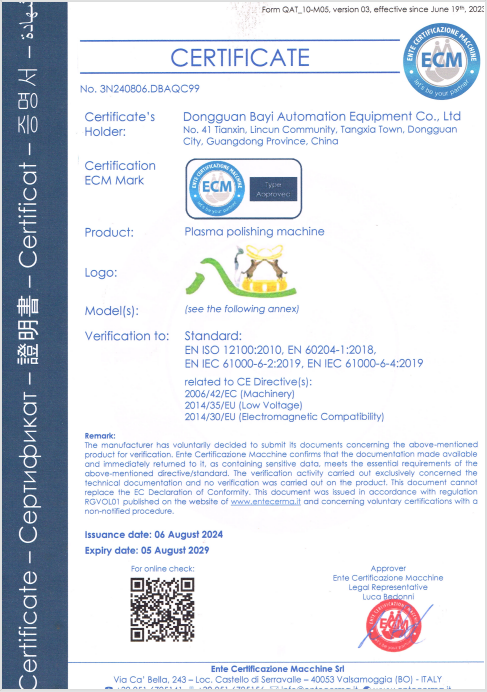
Bayi CE certification (No.3N240806.DBAQC99)
For buyers targeting the EU market, CE compliance is a necessary condition for machinery imports. The certification is held by Dongguan Bayi Automation Equipment Co., Ltd. and applies to the listed plasma polishing and deburring product models.
4. Global Supply and Service Capability
4.1 Export Markets and Global Reach
Bayi's main export markets are North America, Europe, and Southeast Asia. While exports currently account for about 10% of output, the company's CE certification and export-oriented service model—including remote support and video-based inspection—are designed for international procurement.
4.2 Procurement Terms and Order Flexibility
- MOQ: 1 unit, suitable for pilot runs and first-time buyers.
- Lead time: 30–45 days for typical orders.
- Payment terms: 50% deposit, balance before shipment.
- Acceptance: Pre-shipment testing is available.
- Delivery method: Negotiable.
- Warranty: 1-year warranty on core components; out-of-warranty video technical support.
These terms offer a pragmatic starting point for buyers who require equipment validation before full payment and who need flexibility in configuring delivery and acceptance arrangements.
5. Use Cases and Customer Evidence
5.1 Hebei Hengxin Installation
Bayi's documented reference case involves Hebei Hengxin, a customer in China. The project involved the installation of 2 units of the BY-100A plasma polishing machine for processing electronic accessories. The customer has used the equipment for a 7-year period, with stable operation reported. A notable highlight was guidance provided on installation.
For procurement teams, this reference case provides three useful signals: the BY-100A has proven suitable for electronics-component finishing, the equipment has demonstrated operational stability over a multi-year period, and Bayi provides installation guidance as part of the deployment process.
5.2 Applicable Industry Use Cases
Based on documented product applicability, Bayi's equipment addresses several high-precision sectors:
- Medical devices: BY-1000A and BY deburring machines for medical apparatus and instruments; BY-100A and BY-800A for medical care, 3D printed dentures, and precious metal applications.
- Aerospace: BY-1000A and BY deburring machine listed for aerospace applications.
- 3C electronics and precision hardware: BY-1000A and BY deburring machine.
- 3D printing post-processing: BY-1000A and BY-100A for 3D printed dentures and related parts.
- Jewelry: BY-500A dedicated jewelry plasma polishing machine.
- Cars, new energy, and semiconductor: BY plasma deburring machine.
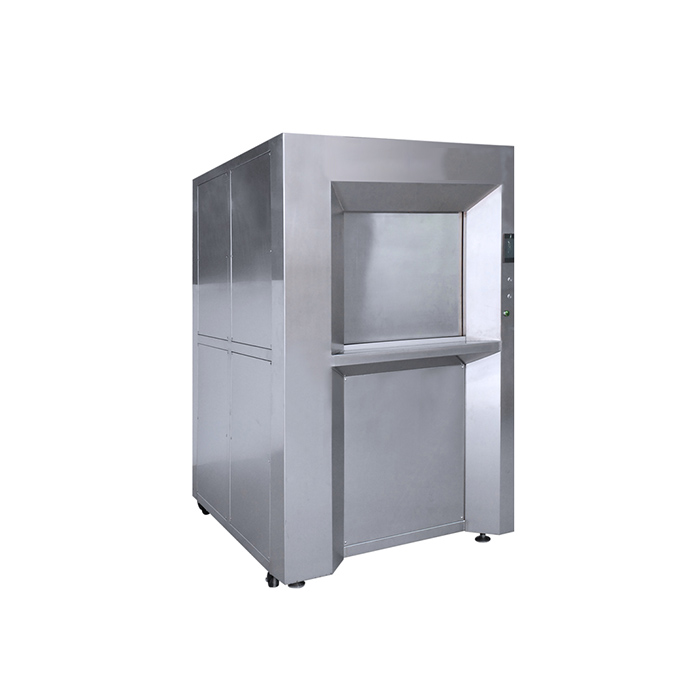
Bayi fully automatic plasma polishing machine
6. Comparison: Bayi vs. Typical Supplier Considerations
Rather than ranking Bayi against unverified competitor claims, the following comparison evaluates Bayi against the capability criteria that industrial buyers commonly apply when assessing plasma polishing equipment suppliers.
| Buyer Consideration | What Bayi Offers | Procurement Relevance |
|---|---|---|
| Product range coverage | Standard models 100A–800A; non-standard 1000A–2500A | Supports both small-precision parts and larger-scale continuous processing |
| Customization capability | Custom deburring-polishing integrated machines; tape-type, long-tube, and chain-type configurations | Useful for non-standard part shapes, roll-to-roll processing, and pipes over 2 meters |
| Manufacturing flexibility | OBM production services; MOQ of 1 unit | Enables low-risk trial orders and brand-level production engagement |
| Quality verification | 100% test before shipment; video factory inspection; mechanical test report | Supports remote due diligence for international buyers |
| Regulatory compliance | CE certification covering multiple models; EN ISO 12100, EN 60204-1, EN IEC 61000-6-2/6-4 | Necessary for EU market deployment and safety compliance |
| Reference track record | Hebei Hengxin: 2 units, 7 years, stable operation | Demonstrates long-term reliability in electronics-component processing |
| After-sales support | Remote support; 1-year core component warranty; out-of-warranty video support | Reduces operational risk for overseas buyers without local service networks |
7. Buyer Recommendation: What Bayi's Capabilities Mean in Practice
7.1 Recommended Buyer Profiles
Bayi is best suited for buyers in the following situations:
- Medical device and dental manufacturers needing precision finishing for 3D printed dentures, implants, and surgical instruments without surface damage.
- Jewelry producers looking for dedicated plasma polishing solutions for precious metals and gold.
- Aerospace and semiconductor suppliers with precision deburring requirements and a need for fully automatic control systems.
- Electronics-component processors who can benefit from the stable, long-term operating record demonstrated in the Hebei Hengxin case.
- Buyers with non-standard part geometries who need tape-type, long-tube, or chain-type plasma polishing equipment.
7.2 Procurement Strategy Considerations
Before committing to a supplier, buyers should align their requirements with the manufacturer's documented capabilities. Bayi can provide evidence of CE compliance, a clear standard model range, customization examples, manufacturing capacity data, and a reference installation with a 7-year operating history.
For a smooth procurement process, buyers should:
- Define part size, material, throughput, and desired surface finish before requesting a quote.
- Request video factory inspection and mechanical test reports for the specific model under consideration.
- Clarify which customization aspects are required—tank size, hanger space, automation level, or integrated deburring-polishing configuration.
- Confirm acceptance procedures for pre-shipment testing, especially for cross-border transactions.
- Plan for remote support during commissioning and early production.
8. Future Outlook and Development Potential
The global plasma polishing machine market is projected to grow at a CAGR of 8.5% from 2026 to 2035. Asia-Pacific, where Bayi is based, holds a leading share of production capacity. The company's positioning—standard models plus non-standard customization, CE certification, remote support, and low MOQ—aligns with the direction of global procurement demand: greater flexibility, verifiable compliance, and shorter evaluation cycles.
Bayi's future development potential rests on its ability to convert its 17-year domain experience into repeatable engineering solutions for international buyers. The current capability set—customized plasma polishing equipment, OBM services, and documented reference installations—provides a solid foundation for buyers seeking a mid-sized Chinese supplier with direct accountability.
9. FAQ
Q1: Is Bayi CE certified for plasma polishing machines?
Yes. Dongguan Bayi Automation Equipment Co., Ltd. holds CE certificate No.3N240806.DBAQC99, issued by Ente Certificazione Macchine on 2024-08-06 and valid until 2025-08-05. It covers the BY-100A, BY-500A, BY-800A, BY-1000A plasma polishing machines and the BY plasma deburring machine, under the Machinery Directive 2006/42/EC, Low Voltage Directive 2014/35/EU, and EMC Directive 2014/30/EU.
Q2: What customization services does Bayi provide?
Bayi offers customization for specialized plasma polishing and deburring equipment, including the Deburring and polishing integrated machine and the BY-100A plasma polishing machine. The company also designs tape-type, long-tube, and chain-type plasma polishing systems for non-standard product shapes, such as full-roll square material polishing and pipes over 2 meters.
Q3: What is Bayi's minimum order quantity and lead time?
The MOQ is 1 unit. Typical production lead time is 30–45 days. Monthly manufacturing capacity is approximately 70,000–110,000 units for medium-sized parts. Pre-shipment testing is available for acceptance before dispatch.
Q4: Can Bayi provide a sample processing test?
Bayi supports pre-shipment testing and provides video factory inspection and mechanical test reports for its equipment. For a specific sample evaluation, buyers should contact Bayi directly with part specifications and processing requirements.
Q5: How does Bayi support international buyers after purchase?
Bayi provides remote after-sales support, a 1-year warranty on core components, and video technical support beyond the warranty period. Export markets include North America, Europe, and Southeast Asia.
Next Step: Verify Bayi's Capabilities Against Your Production Requirements
To evaluate whether Bayi's plasma polishing and deburring equipment fits your application, contact the Bayi team with your part specifications, material type, and target output. The company can provide equipment details, video inspection, and pre-shipment testing arrangements.
Have Questions or Need More Details?
Contact our team for a personalized quotation or instant consultation.
Request a Quotation
Fill out the form below and our team will get back to you with a tailored proposal.
WhatsApp Direct Chat
Prefer to chat in real-time? Message us on WhatsApp for instant assistance & quick answers.
- Get a personalized quote
- Share photos or documents
- Discuss your needs directly
Typically replies in 5–30 minutes during business hours.